

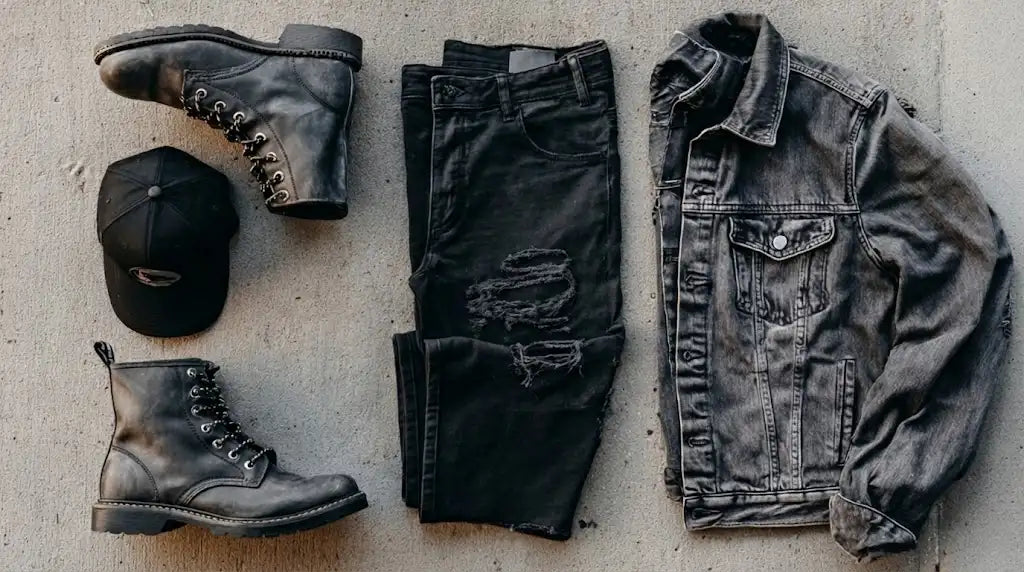
You're standing in front of your closet an hour before the show, trying to figure out what to wear. You want to look good. You want to fit in. You want to have the right vibe for the night.
Here's the thing nobody tells you: looking good doesn't matter nearly as much as not ruining your night.
Most concert outfit advice is useless. Wear comfortable shoes. Dress for the weather. Thanks, very helpful. That's not what you actually need to know.
What you need to know is how to avoid the specific ways your outfit can turn against you. The shoes that feel fine at 7pm but destroy your feet by 10pm. The shirt that's soaked through with sweat by the third song. The bag that doesn't meet venue policy and has to be thrown away at the door.
This guide is about regret prevention. It's based on the mistakes people make over and over again, the ones you only learn about after you've made them yourself. Consider this your shortcut.
Why Most Concert Outfits Fail
People dress for the photo, not the experience. They plan the outfit around how it looks in the mirror before they leave. They don't think about what happens three hours into a show when they're hot, tired, compressed into a crowd, and wishing they'd made different choices.
The outfit that looks perfect at 6pm might be your enemy by 10pm.
Here's what goes wrong:
People forget they'll be standing for hours. Not walking around, not sitting down, just standing in place on concrete. That's a completely different physical demand than almost anything else you do in normal life.
They underestimate how hot it gets. Even in air-conditioned venues, pack a few thousand bodies together and the temperature climbs fast. Your body heat, everyone else's body heat, the lights, the energy. It adds up.
They don't think about contact. You're going to get bumped. Probably spilled on. Possibly crushed against strangers. Your outfit needs to survive that.
They ignore entry logistics. Bag policies, metal detectors, security lines. These can derail your night before it even starts.
The goal isn't to look amazing. The goal is to wear something that lets you forget about your clothes entirely and just experience the show.

The Only Things That Actually Matter
Before we get into specifics, here are the four criteria that should drive every outfit decision.
Can you survive in this?
Can you stand in it for three to four hours? Can you move your arms, bend over, navigate through a crowd? Will you overheat? Will you freeze? If someone spills a drink on you, will your night be ruined?
Your outfit needs to survive the physical reality of a concert, not just look good in a photo.
Will this slow you down at the door?
Bag policies are stricter than ever. Metal detectors are standard. If your outfit creates friction at security, you're starting the night frustrated and possibly missing the opener.
Does this match the crowd density?
A seated theater show is different from a packed GA floor. The level of physical contact, heat, and chaos varies dramatically. Your outfit should match what your body is actually going to experience.
Do you care more about this outfit than the show?
If you're going to spend the night worried about your clothes, adjusting things, protecting delicate items, or stressing about damage, you chose wrong. The best concert outfit is one you completely forget you're wearing.
What Not to Wear to a Concert
Quick list. If you're in a rush, avoid these and you'll probably be fine:
- Open-toed shoes to any GA or standing room show. Your feet will get stepped on. It will hurt.
- White shoes to outdoor festivals. They will not stay white.
- Brand new shoes you haven't broken in. Blisters by the third song.
- Strapless anything without reliable backup support. Constant adjusting ruins the night.
- Heavy dangling jewelry. Catches on things, falls off in crowds, becomes a liability.
- Light-colored shirts to packed indoor shows. Shows every drop of sweat.
- Clothes you can't afford to ruin. Spills, sweat, and mystery floor liquid are guaranteed.
- Bags that don't meet venue policy. Check before you leave or risk throwing it away at the door.
Most concert outfit failures come from forgetting that you're signing up for a physical experience, not a photo op. The "what fails" sections below go deeper on each venue type.
By Venue Type
The physical reality of where you're going matters more than the genre of music. A punk show in assigned seats is a completely different experience from a punk show on a GA floor. Dress for the venue, not just the artist.

Outdoor Festivals
What you're dealing with:
Sun beating down on you. Possibly rain with no warning. Walking long distances between stages. Dirt, dust, mud, grass. Limited access to your car or anywhere to store things. A full day of being outside in whatever weather shows up.
What works:
Layers you can tie around your waist when it gets hot. Shoes that can handle dirt and won't break your heart if they get trashed. Clothes you genuinely don't care about. Sunglasses and a hat if it's sunny. Pockets or a small crossbody bag that meets clear bag requirements.
Think function over fashion. You're essentially spending a day outside in a crowd of thousands. Dress like you're going on a hike where you might also get beer spilled on you.
What fails:
White shoes. They will not stay white. Anything you'd be genuinely upset to throw away afterward. Elaborate outfits that can't handle dust, sweat, or sudden rain. Heavy bags you have to carry around all day. Anything that requires maintenance or adjustment.
Festival outfits in photos look fun. In reality, you need to survive an endurance event.
Indoor Standing / GA Floor (Standing Concerts)
What you're dealing with:
Standing concerts and GA floor shows are the most physically demanding venue type. Heat. Lots of it. Bodies packed together generating warmth. Sweat, yours and possibly other people's. Physical contact from all directions. Bumping, pushing, the occasional elbow. Limited personal space, sometimes none at all.
What works:
Breathable fabrics that can handle sweat. Shoes with good grip that can take a beating and won't matter if someone steps on them. Hair up or secured if you have long hair. Minimal jewelry, nothing dangling or loose. Dark colors that hide sweat better than light ones.
You're going to get hot. You're going to get bumped. Dress for contact. If you're going to a concert alone, this matters even more since you won't have friends to hold your stuff or watch your back.
What fails:
Loose items that can fall off and disappear into the crowd forever. Open-toed shoes, because your feet will get stepped on and it will hurt. Anything that requires constant adjusting. White or light colors that show sweat immediately. Elaborate hairstyles that will be destroyed within the first three songs.
The GA floor is a physical experience. Your outfit should be built to survive it.
Indoor Seated Shows
What you're dealing with:
Climate control. Your own designated space. Less physical intensity. More predictability.
What works:
This is where you have the most freedom. You can actually dress for the aesthetic you want without worrying as much about survival. Layers still help because venues can run cold, especially if you're directly under an air vent. Make sure you're comfortable enough to sit for a couple hours.
Seated shows let you prioritize style a bit more. Enjoy that.
What fails:
Outfits that make it awkward to navigate to your seat, especially if you're in the middle of a row. Very tall hats or elaborate headwear that blocks the view of people behind you. Bags that don't meet venue policy still apply.
One note: even at seated shows, you might end up standing. If the crowd gets up, you're getting up too. Don't assume you'll be sitting the whole time, especially for high-energy artists.
Stadium and Arena Shows
What you're dealing with:
Massive venues. Long walks from parking to your seat. Stairs, lots of stairs. Temperature that can vary wildly depending on where you're sitting. Concrete everywhere.
What works:
Shoes built for walking, not just standing. You're going to cover distance. Layers because the floor might be warm while the upper deck is freezing. Think about the full journey: parking lot to entrance to seat to bathroom to concessions and back. That's a lot of ground.
What fails:
Heels or anything hard to walk distance in. Shoes that hurt on concrete. Heavy items you have to carry through a stadium. Anything that makes navigating a massive venue more difficult than it needs to be.
Arena shows are a logistical experience as much as a musical one. Dress accordingly.
Common Outfit Regrets
These are the specific ways outfits fail. Learn from other people's mistakes.
Shoes that feel fine standing, terrible after walking
You tested them standing in your apartment for two minutes. You didn't test them walking a mile through a venue and then standing on concrete for three hours straight. By the end of the night your feet are screaming and you still have to walk back to your car.
Test your shoes with actual movement and duration in mind.
The shirt that's soaked through by song three
That cotton shirt felt fine when you left the house. The venue was cool when you walked in. Then the crowd packed in, the lights went up, and suddenly you're drenched. Now it's clinging to your body, you're uncomfortable, and you have two more hours to go.
Assume you're going to sweat more than you think.
Jewelry that becomes a liability
Dangling earrings that catch on something or someone. Necklaces that swing into your face when you're dancing. Rings that dig into your hand when you're pressed against a barricade or holding onto a railing. Bracelets that fall off and vanish into the crowd, gone forever.
If it dangles, catches, or could fall off, reconsider. (For more on navigating crowd dynamics without becoming the person everyone complains about, see our guide to concert etiquette.)
The outfit that requires constant maintenance
Strapless tops that need pulling up. Pants that won't stay in place. Skirts that ride up in a crowd. Anything that makes you think about your clothes instead of the music.
You should be watching the show, not managing your outfit.
Shoes that get destroyed
Those white sneakers you love? The ones you've kept clean for months? They're now covered in beer, mud, mystery liquid from the floor, and the imprint of a stranger's boot. That's not coming out.
Never wear shoes to a concert that you're not prepared to lose.
The "it looked good in the photo" outfit
You got the pre-show photo for Instagram. Great. Now you have to actually survive the next four hours in that outfit. Halfway through the set you're miserable. Was the photo worth it?
Dress for the experience, not the content.
Long hair down in a sweaty crowd
It's stuck to your neck. It's stuck to your face. It's in your mouth. It's stuck to the sweaty arm of the stranger pressed against you. You're constantly pushing it out of the way instead of watching the show.
Bring a hair tie. Use it.
No pockets
Now you're holding your phone in your hand all night. Or you're digging through a bag every time you need to check the time or grab your ID. Every small task becomes a minor ordeal.
Pockets are freedom. Don't underestimate them.
What to Do About Bags and Security
This is the stuff most outfit guides ignore, and it can completely derail your night.
The reality of venue policies now
Most venues have strict bag policies. Clear bags only. Size limits. No backpacks. This isn't a suggestion, it's enforced at the door. If your bag doesn't comply, you might have to throw it away, take it back to your car, or miss part of the show dealing with it.
Check the venue's bag policy before you leave the house. Not when you're in line. Before.
What generally works
Clear bags, as annoying as they are, will get you in almost anywhere. Small crossbody bags or fanny packs usually comply with size limits and keep your hands free. Some venues allow small clutches under a certain size.
When in doubt, go smaller than you think you need.
Entry friction
Metal detectors are standard at most venues now. Heavy belt buckles set them off. Lots of jewelry sets them off. Boots with metal components set them off. Then you're doing the awkward shuffle of removing items, walking through again, getting wanded, holding up the line.
If you want to get in fast, dress for speed. Minimal metal, easy shoes, nothing complicated.
Go hands-free
You want your hands available. For your phone, for a drink, for clapping, for just existing without juggling stuff. Bags you have to hold or constantly adjust become a burden. Crossbody or waist bags beat handheld options every time.
What to leave at home
Valuables you'd be devastated to lose. Bags that don't meet policy. Anything you'll spend the night worrying about. If losing it would ruin your week, don't bring it to a concert. (Your ticket stub probably isn't physical anymore anyway, so that's one less thing to worry about.)
The Band Tee Question
This comes up constantly. Do you wear the shirt of the artist you're seeing? Is that cool? Is it try-hard? Is there some unwritten rule about this?
The honest answer
Nobody actually cares. Truly. The crowd is not analyzing your shirt choice. Everyone is there for the music, not to judge your outfit decisions.
What people do
Wearing the artist's shirt is totally normal and very common. It's not try-hard. It's the most obvious choice and there's nothing wrong with obvious.
Wearing a different band's shirt is also fine. Sometimes it's a conversation starter. Sometimes it signals something about your broader taste. Sometimes it's just the shirt you grabbed.
Wearing a vintage shirt of the artist gets respect from people who notice, which isn't many.
Wearing the shirt you bought that night at the merch booth is a classic move. You see it at every show.
Wearing a shirt from the current tour you're attending, as in you bought the shirt at the merch stand and immediately put it on, some people find this funny or overly eager, most don't notice at all.
The real answer
If you're spending energy worrying about whether your shirt is cool enough, you're overthinking it. Nobody is going to judge you. They're there to see the show, not evaluate your wardrobe.
Wear the shirt. Don't wear the shirt. It genuinely does not matter.
The 30-Second Regret Checklist
- Before you walk out the door, run through these questions.
- Can I stand in this for three to four hours?
- Would I be okay if this gets spilled on?
- Does this require constant adjusting?
- Do I have pockets or a hands-free bag?
- Does my bag meet the venue's policy?
- Will anything I'm wearing slow me down at security?
- Am I wearing shoes I've actually walked in before?
- Do I care more about this outfit than the show?
- If you hesitated on any of those, reconsider.

The Point of All This
The best concert outfit is one you don't think about once the music starts.
You're not going to a concert to look good in photos. You're going to experience something. To feel the music, to be part of a crowd, to have a night you'll remember.
Years from now, you'll remember how the show made you feel. You'll remember the songs they played, the moment the lights went down, the energy in the room. You probably won't remember what you wore. (That's why building a system to capture those memories matters more than perfecting your outfit.)
Unless what you wore ruined the night. Then you'll definitely remember that.
The outfit fades. The experience sticks. Don't let bad clothing choices hijack the memory.
Frequently Asked Questions
Can I wear jeans to a concert?
Yes. Jeans work for most venues and most shows. The main consideration is fit: avoid very tight jeans for GA floor shows where you'll be standing for hours and need some flexibility. Stretchy denim or relaxed fits handle the physical demands better than rigid skinny jeans.
Should I wear the band's t-shirt to their concert?
Totally fine. Nobody cares as much as you think. Wearing the artist's shirt is common and not try-hard. Wearing a different band's shirt is also fine. Wearing the shirt you just bought at the merch booth is a classic move you'll see at every show. Stop overthinking it.
What shoes should I never wear to a concert?
Open-toed shoes to any GA floor show (your feet will get stepped on and it will hurt). Brand new shoes you haven't broken in. White shoes to outdoor festivals. Heels to stadium shows where you'll walk a mile before reaching your seat. Any shoe you'd be upset to see destroyed.
Is there a dress code for concerts?
Most concerts have no dress code. Exceptions exist: some jazz clubs, classical venues, or VIP sections may have guidelines. A few upscale venues request "smart casual." When in doubt, check the venue's website. But for 95% of shows, wear whatever survives the experience.
What should I do with my bag at a concert?
Check the venue's bag policy before you leave the house. Most venues now require clear bags or enforce strict size limits (often 4.5" x 6.5" or smaller for non-clear bags). Crossbody or waist bags keep your hands free. If your bag doesn't comply, you might have to throw it away at the door.
How do I dress for an outdoor festival vs. an indoor show?
Outdoor festivals: layers you can tie around your waist, shoes you don't mind trashing, sun protection, clear bag that meets policy. Indoor GA shows: breathable fabrics, dark colors that hide sweat, secure shoes with good grip, minimal loose jewelry. The outdoor festival is an endurance event; the indoor show is a heat test.
Capture What Actually Mattered
You won't remember the outfit. You will remember the show—if you write it down. The Concerts Remembered app or a concert journal helps you hold onto the moments that matter before they fade.


Share: