

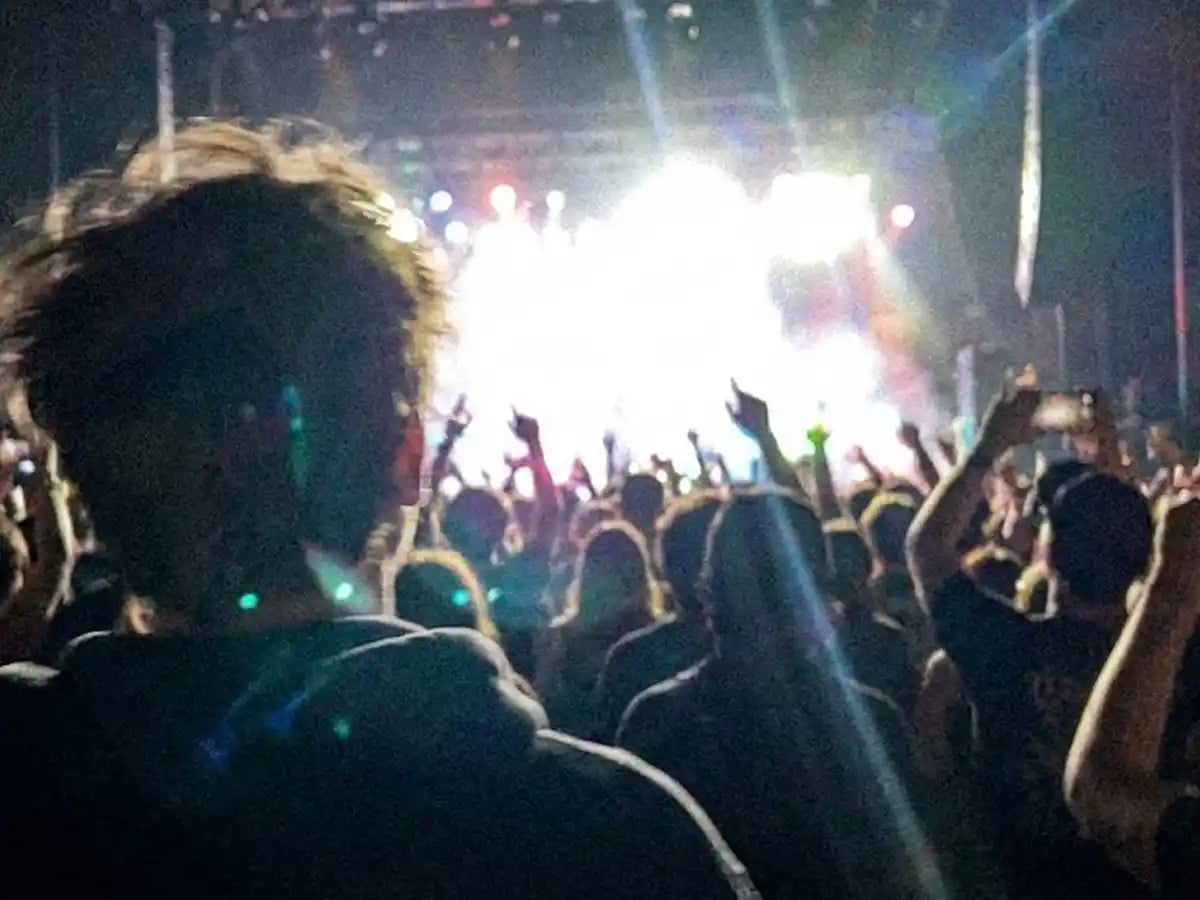
Nobody hands you a rulebook when you walk into a venue. You just figure it out as you go, learning through experience which behaviors are acceptable and which ones make you the person everyone complains about online the next day.
Some of this is common sense. Some of it depends on the type of show. And some of it is genuinely debatable, which is part of what makes concert culture interesting.
This guide covers the real etiquette questions that actually come up. Not the obvious stuff like "don't punch anyone." Whether you're heading to your first general admission show or you've been going to concerts for decades, it never hurts to think about how your actions affect the people around you. (And if you want to see which concert stereotypes you've encountered, or been, check out our Concert Culture Index: 50 Types of Concert-Goers.)
General Etiquette That Applies to Every Show
These are the basics that transcend genre, venue type, and crowd size.
Talking during songs
This is the one everyone agrees on. Brief comments to your friend between songs? Fine. Leaning over to say "I love this one" when a song starts? Totally normal. Having a full conversation during a quiet ballad while the people around you are trying to listen? Not fine.
If you want to catch up with your friends, go to the bar area or the back of the venue. You're at a concert, not a coffee shop. The people around you paid money to hear the artist, not your weekend plans.
Filming and phones
Let's be realistic. It's 2026. People are going to take photos and videos at concerts. That ship sailed a long time ago.
The issue isn't capturing moments. The issue is how you do it. Holding your phone above your head for an entire song blocks the view of everyone behind you. Recording every single song means you're watching the concert through a four-inch screen instead of actually experiencing it. And nobody, truly nobody, has ever watched your Instagram story and thought "wow, what an amazing 30 second clip of a song I can barely hear."
Take your photos. Grab a video of your favorite song. Then put the phone away and be present. If you must record, hold it at chest or chin level rather than above your head.
And if you're one of those people recording on a full-sized iPad, I don't know what to tell you.
Singing along
Singing along is encouraged at most shows. That's part of the communal experience. The artist often wants to hear the crowd singing back.
What crosses the line is belting every word at full volume directly into the ear of the person next to you. You're not the performer. The people around you didn't pay to hear your rendition. There's a difference between joining the crowd and making yourself the main character.
Also, learn to read the room. Some songs are meant for the crowd to sing. Some songs are meant for everyone to shut up and listen. When the artist strips things down for a quiet acoustic moment, that's not your cue to prove you know all the words.
Knowing your limits
Have fun. Enjoy yourself. But don't be the person who gets so drunk they're spilling beer on everyone, falling into strangers, or getting escorted out before the headliner even takes the stage.
Drunk and happy is fine. Drunk and sloppy ruins the experience for everyone in your immediate radius. If you can't stand up straight, you've probably gone too far.
Standing vs. Sitting: The Eternal Debate

This causes more arguments than almost anything else at concerts, and honestly, there's no perfect answer.
The general principle
Match the energy of the section you're in. If everyone around you is standing, stand. If everyone is sitting, you should probably sit too, or at least be aware that you're blocking the view of the people behind you.
But it's more complicated than that
Some shows are meant to be standing even in seated sections. Rock concerts, punk shows, EDM events. If you bought a ticket to a high-energy show in a seated venue and you're mad that people are standing, you may have misjudged what kind of experience you were signing up for.
Genre matters here. A folk singer-songwriter show has different norms than a metal concert. An arena pop show is different from an intimate jazz club performance. Pay attention to what kind of event you're attending.
The wave effect
Often the front rows stand, and then everyone behind them has to stand to see anything. This is just how it goes sometimes. You can be annoyed about it, but the person in row three isn't obligated to sit down so that you in row fifteen can stay comfortable.
What if you want to stand but everyone is sitting?
Check if there's a standing section you can move to. Some venues have designated areas for people who want to be on their feet. If not, you can stand, but know that you're making a choice that affects the people behind you. Whether you care about that is up to you.
What if someone stands in front of you and blocks your view?
You can politely ask if they'd consider sitting. But they're not obligated to say yes. Your best bet is usually to stand yourself or shift your position to find a better sightline.
Tall People
Let's settle this one clearly: tall people are allowed to stand wherever they want.
They bought a ticket. They didn't choose their height. Asking someone to move to the back of the crowd because they're tall is rude. They have just as much right to a good spot as anyone else.
I've heard from tall people who get asked to move at almost every show they attend. Some of them have specific reasons for wanting to be close, including things like hearing issues or vision problems that make it hard to see from far away. You don't know their situation.
What tall people can do if they want to be considerate
This is optional kindness, not an obligation. But some tall concert-goers choose to avoid the dead center of the front row, or they'll shift slightly if someone politely mentions they can't see. That's generous of them, not required.
What shorter people can do
Arrive earlier to get a better spot. Find angles where you can see between people. Accept that live music sometimes involves imperfect sightlines. Work around the situation rather than expecting others to accommodate you.
The thing you can control
Unlike height, hats are a choice. If you're wearing a big cowboy hat or some elaborate headpiece that adds six inches to your silhouette, you can take it off. Same goes for signs and posters. Hold them up for a song if you want, but keeping them raised for the entire show is inconsiderate.
Barricade Culture and Getting to the Front
The barricade, sometimes called the rail, is the metal barrier between the crowd and the stage. It's prime real estate, and getting there requires either commitment or aggression. Only one of those is acceptable.
How early do people line up?
This depends entirely on the artist and the fanbase. For major tours with dedicated fans, people start lining up hours before doors open. Sometimes the night before. For regular shows, arriving when doors open usually gets you reasonably close.
If you want barricade, you need to earn it with your time.
Holding spots for latecomers
This is where things get contentious.
Holding a spot for one friend who went to the bathroom is generally fine. Holding spots for four people who show up two hours later is not. If your whole group wasn't willing to wait in line together, your whole group doesn't get barricade. That's how it works.
The people who waited for hours don't owe you space because your friends were running late.
Pushing forward after the show starts
During the opener, there's natural movement as people shift around. That's expected. Some crowds are more fluid than others.
But aggressively shoving your way to the front during the headliner, when everyone around you has been waiting for hours, is widely considered a jerk move. The classic excuse of "I'm just trying to find my friends" works exactly once before people stop believing you.
If you didn't put in the time, you don't get the spot. Find a place where there's actually room.
Pushing to the front and then just standing there
This is a specific kind of annoying. If you're going to fight your way to the barricade, at least match the energy of the people who earned their spots. Don't shove through the crowd and then stand motionless with your arms crossed while everyone around you is dancing.
Rail etiquette
If you claim a spot on the barricade, you're committing to it. Leaving to get a drink and expecting your spot to be held isn't realistic. The barricade is a commitment.
Some fanbases have developed informal rotation systems where people take turns at the rail. This is a beautiful thing when it happens, but it's not universal. Don't expect it.
Mosh Pit Etiquette
Pits look chaotic from the outside, but they actually operate on a set of unwritten rules that most participants follow. If you're going into one, know the code.

The fundamentals
If someone falls, you pick them up immediately. This is non-negotiable. You stop what you're doing and get them back on their feet.
If someone wants out, you help them out. Create space, point them toward the edge, assist however you can.
Keep your elbows down and your fists unclenched. Moshing is pushing, bumping, and shoving. It's not punching and kicking. If you're throwing actual strikes, you're doing it wrong and someone will probably correct you.
Know what you're getting into
Pits form in predictable spots, usually center floor a bit back from the barricade. If you don't want to be in the pit, don't stand in the pit zone. Watch where the energy is building during the opener and position yourself accordingly.
If you buy GA floor tickets to a band known for heavy music and rowdy crowds, and then you get upset that people are moshing, that's on you. You knew what you were buying into.
Crowd surfing
This is part of the culture at certain shows. If you're going to do it, try to give the people below you some warning before you go up. Keep your legs together and don't kick. And accept that you might get dropped. It happens.
When to leave the pit
If you're exhausted, dehydrated, or overwhelmed, get out. Nobody respects the person who stays in the pit despite clearly struggling. Work your way to the edge and people will help you out.
Standing at the edge
Standing at the perimeter of the pit is a choice that comes with consequences. You're going to get bumped. Bodies are going to crash into you. That's part of it. If you don't want any contact, move further back.
Getting mad at people for bumping into you while you're standing at the edge of a mosh pit is like getting mad at water for being wet.
What's never acceptable
Targeting specific people. Throwing real punches. Groping anyone. Moshing in a crowd that isn't moshing. These aren't gray areas.
Opener Etiquette
This one matters more than people realize, and it's one of the most commonly violated rules.
The baseline
Openers deserve basic respect. They're performing artists, often early in their careers, playing to crowds who aren't there to see them. That's already a tough situation. Don't make it worse.
What respect looks like
You don't have to love them. You don't have to know their music. But don't talk loudly over their set. Don't boo. Don't chant for the headliner. Polite applause between songs costs you nothing and means a lot to someone trying to build a career.
What's actually fine
Arriving during the opener rather than before is normal. Venues expect this. Not being super into the music is fine. Getting drinks or using the bathroom during their set is fine.
The line is active disrespect versus passive indifference. Passive indifference is acceptable. Active disrespect is not.
Why it matters
Today's opener might be tomorrow's headliner. Some of the biggest artists in the world spent years opening for other people. You might discover your next favorite band if you actually pay attention.
Beyond that, it's just basic human decency. There's a person on stage putting themselves out there. The minimum you can do is not make their job harder.
The take
Talking through the opener is probably the most common etiquette violation at concerts and one of the most disrespectful. If you want to have a conversation, move to the back, go to the bar area, or step outside. The people around you who are trying to listen will appreciate it.
Seat Jumping
Don't take seats that aren't yours.
This seems obvious, but it happens constantly. Someone sees empty seats closer to the stage and decides to upgrade themselves. Then the actual ticket holders show up, and there's a whole confrontation that disrupts everyone in the surrounding rows.
If you wanted better seats, you should have bought better seats. The ones you're eyeing aren't empty. Someone paid for them. The fact that those people haven't arrived yet doesn't make the seats available.
Security will often get involved, which creates even more of a scene. Just stay in your assigned seat.
Signs, Posters, and Accessories
Bringing a sign to a concert can be fun. Maybe you have a song request, or a message you hope the artist will see, or just something creative you want to share.
The etiquette around signs is simple: hold it up for a song or two, then put it down. Keeping a sign raised for the entire show blocks the view of everyone behind you for hours. That's not fair to them.
Same principle applies to recording on your phone, but signs are often bigger and more obstructive.
As mentioned earlier, big hats and elaborate headwear are a choice. If you can remove it, consider removing it. Your fashion statement shouldn't come at the expense of someone else's sightline. (For more on what to wear to a concert without becoming a problem for the people around you, we have a full guide.)
The Phone Culture Problem
This deserves its own section because it's become such a significant part of the modern concert experience.
There's a difference between capturing moments for yourself and performing for social media. One is about memory. The other is about content.
The rise of TikTok has changed concert crowds in noticeable ways. Some shows now have entire sections of people who seem more focused on getting the viral clip than experiencing the music. The crowd energy suffers when half the room is watching through their phones.
There are also more people showing up to concerts for artists they don't really know, treating it as a social event or a content opportunity rather than a music experience. That's their right. But it does change the atmosphere when a significant portion of the crowd doesn't know the songs and isn't engaged with the performance.
None of this means you can't take photos or videos. Just be intentional about it. Capture what you want to remember, then put the phone away and actually be there.
Leaving Early
The case against leaving before the encore
You might miss the best song of the night. Encores often include the biggest hits, special covers, or memorable moments. The shared energy of a full crowd at the end is part of what makes live music special.
The case for leaving early
Sometimes you have a long drive. Sometimes the encore is predictable and you've heard enough. Sometimes you just want to beat the traffic. These are all valid reasons.
The etiquette
If you're going to leave early, especially if you're in the middle of a row, be discreet about it. Don't make a big production of gathering your things during the last song. Don't loudly announce your departure. Just slip out quietly.
And please don't be the person who leaves before the encore, then rushes back when you hear the band come back on stage, pushing past everyone who stayed.
The Genuinely Controversial Stuff
Some etiquette questions don't have clear answers. Here's where reasonable people disagree.
Yelling song requests
Some artists engage with requests. Most ignore them. Shouting a song title once is probably harmless. Yelling the same request repeatedly throughout the night is annoying for everyone around you. And yelling requests during quiet moments is almost always unwelcome.
Throwing things on stage
This has a long tradition. Flowers, bras, small soft items. Some artists love it. Some artists hate it. Anything that could actually hurt someone is obviously wrong. Read the room and know the artist.
Asking someone to move or switch spots
In general admission, the answer to "can you move?" is usually no. First come, first served. But politely asking isn't rude as long as you accept no for an answer. What's rude is asking and then getting upset when they decline.
Dancing when nobody else is dancing
Honestly, go for it. You might be the one who gets the crowd moving. Live music is meant to make you feel something, and if that feeling wants to come out through movement, let it. Just don't crash into people who clearly want to stand still.

FAQs
What if someone is being a jerk and won't stop?
You have a few options. You can move somewhere else. You can ask them once, politely, to stop whatever they're doing. Or you can flag down security if the behavior is genuinely disruptive or threatening.
What you shouldn't do is escalate into a confrontation. It's not worth ruining your night over someone else's bad behavior. Sometimes the best move is just putting some distance between you and the problem.
Is it okay to ask someone to stop filming?
You can ask, but they're not obligated to stop. A better strategy is usually to shift your own position so their phone isn't directly in your sightline.
What if I accidentally bump into someone or spill a drink?
Apologize immediately and sincerely. Accidents happen at concerts. The space is crowded, people are moving around, drinks get knocked. Most people will forgive a genuine "I'm so sorry" and move on. What they won't forgive is acting like it's not a big deal or failing to acknowledge it at all.
Do these rules apply to every genre?
The fundamentals apply everywhere, but intensity and norms vary. A metal show has different expectations than an acoustic set. A rave operates differently than a jazz club. Read the room and match the energy of the crowd around you.
What about festivals versus regular concerts?
Festivals have some additional considerations. Tarping, where people lay down blankets or tarps to claim large amounts of space, is generally frowned upon. The transient nature of festival crowds means more movement and more tolerance for people shifting positions between sets. But the core principles remain the same: be aware of how your actions affect others.
Summary
Concert etiquette ultimately comes down to one principle: remember that everyone around you paid money and made time to be there too.
That doesn't mean you can't have fun. Dance, sing, feel the music however you want to feel it. Just stay aware of how your behavior affects the people sharing the space with you.
The best concert crowds have a collective energy where everyone looks out for each other while losing themselves in the music. Be part of that energy, and you'll never be the person getting complained about on Reddit the next day.
Remember the Night, Not Just the Rules
The etiquette fades from memory. The experience sticks. If you want to hold onto what actually mattered about the show, the Concerts Remembered app or a concert journal helps you capture it before the details blur together.
Share: