

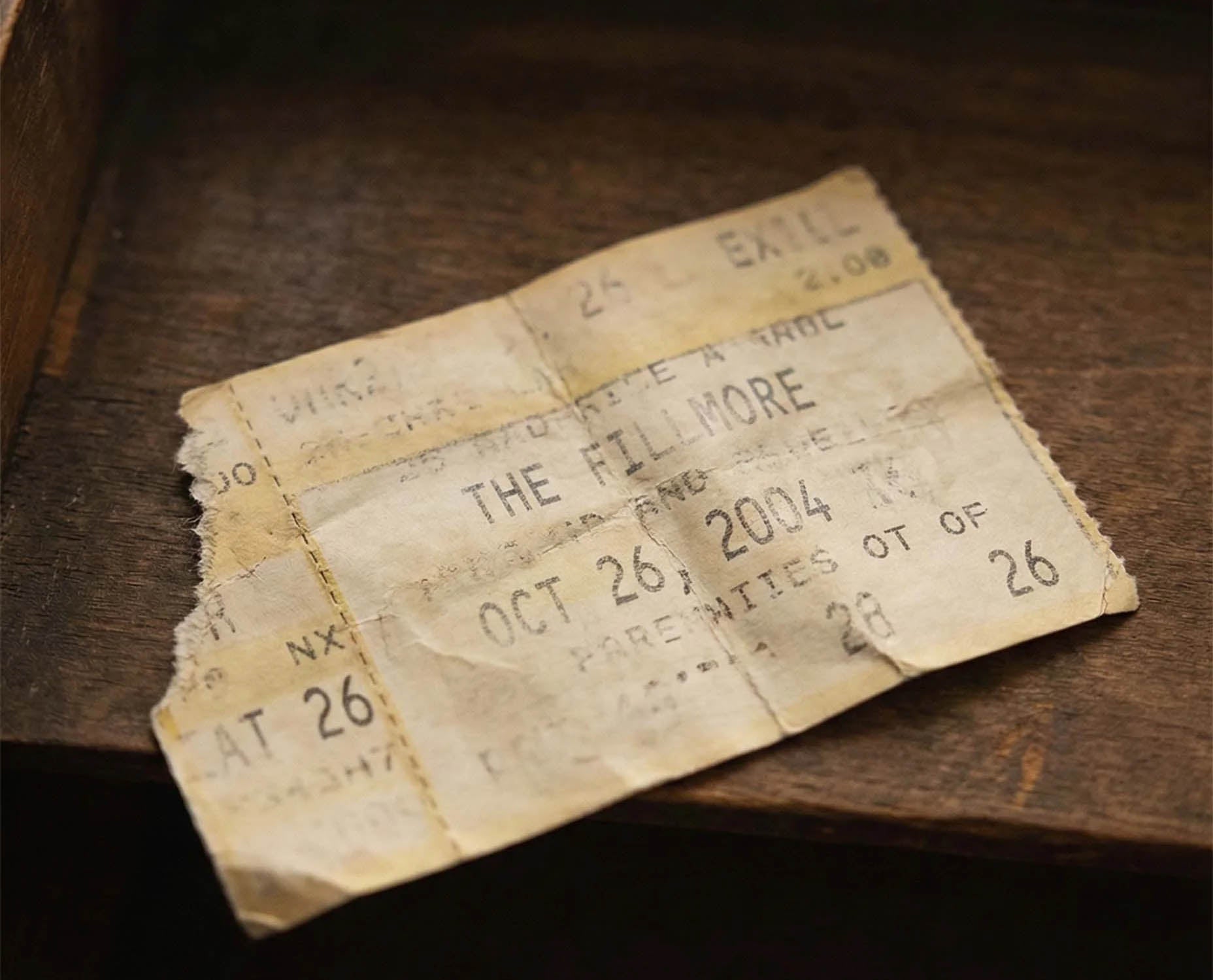
I still have a shoebox somewhere. Crammed with ticket stubs from 1990 to maybe 2012. Faded thermal paper. A few that are basically blank now. The ink gave up years ago. Some still legible: the venue, the date, the seat number. A couple have setlists scribbled on the back in drunk handwriting.
I haven't added to that box in almost a decade. Not because I stopped going to shows. Because the shows stopped giving me anything to keep.
The Shift Happened Faster Than We Noticed
Remember when you'd get a ticket and it felt like something?
A real piece of card stock. Maybe a cool design. The artist's name, the venue, the date, all printed right there. You'd stick it in your wallet, then your pocket, then a drawer. Some people framed them. Some kept shoeboxes. Some tucked them into journals.
It wasn't just proof of purchase. It was proof you were there.
Then tickets went digital. Slowly at first: PDFs you'd print at home on flimsy paper. Then mobile tickets with barcodes. Then Apple Wallet passes that disappear after the event. Now half the time you don't even get that. You get a QR code texted to you ten minutes before doors.
The experience stayed the same. The artifact vanished. If you still have physical tickets worth keeping, our complete guide to preserving concert tickets covers how to make them last.
Why This Actually Matters
This might sound like nostalgia for nostalgia's sake. It isn't.
Physical tickets did something that digital tickets don't: they created accidental memory triggers.
You'd find an old stub in a jacket pocket and suddenly remember the whole night. Not because you were trying to remember, because the object brought it back. The texture, the faded ink, the crease where you folded it. Physical things carry memory in a way that files on your phone don't.
Digital tickets are optimized for entry. Get you through the door, then gone. They're not designed to be kept, because keeping them isn't the point. But for the people who care about their concert history, that's exactly what got lost.
The shift to digital isn't just about convenience—it's about economics. Ticketing fees now average 28.65% of face value, up from 21% in 2016 (NITO). The platforms optimized for revenue extraction, not memory preservation.
And it's not just tickets. It's the whole ecosystem of concert ephemera.
Printed programs. Posters you grabbed off the wall after the show. Wristbands from festivals. Setlists tossed into the crowd. These things used to accumulate naturally, just by going to shows. Now you have to work to walk away with anything physical at all.
The Memory Problem Nobody Talks About
Here's what happens when everything is digital and nothing is kept:
You forget.
Not the big shows. You'll always remember the first time you saw your favorite artist, or the night that changed everything. Those are locked in.
But the other ones. The random Tuesday opener, the festival set you stumbled into, the show you almost skipped. Those fade. And without something to trigger the memory, they're just gone. There's a reason so many people can't remember concerts they attended.
Five years from now, you won't remember you were there. Not because the experience wasn't meaningful. Because nothing made you remember.
This is the quiet cost of the shift to digital. We're not losing tickets. We're losing the reminder that we lived.
Meanwhile, the secondary ticket market hit $31 billion in 2025 and is projected to reach $90 billion by 2035 (Mordor Intelligence). The industry is capturing more value than ever from fans—while giving them less to keep.
What People Are Doing About It (The DIY Landscape)
Some people are fighting back. Keeping memories the hard way.
The screenshot hoarders. Taking photos of the QR code, the confirmation email, the Ticketmaster page. Anything to have a record. It works, but scrolling through a camera roll isn't the same as flipping through a box of stubs.
The physical collectors. Still buying merch, still grabbing posters, still asking for paper tickets when they exist. The problem is they increasingly don't exist.
The journal keepers. Writing it down after every show. Artist, date, venue, notes about the night. This is actually one of the best solutions, if you have the discipline to do it consistently.
The spreadsheet crowd. A Google Sheet with every concert logged. Functional, searchable, soulless. The data is there but the feeling isn't.
The tattoo people. Okay, this one's more permanent. But some people literally get inked with concert dates or lyrics. Can't lose that ticket stub.
None of these are wrong. But they're all workarounds for a problem that didn't use to exist. If you still have stubs worth saving, figuring out how to display concert tickets is one way to give them a second life instead of leaving them in a drawer. And if you're wondering whether those faded stubs are actually worth holding onto, yes, they are.
Want to recreate tickets for shows that only gave you a QR code? Our free concert ticket generator lets you build a printable ticket from any show, past or present.
The Intentional Shift
Here's where it gets interesting: the people who are most intentional about keeping concert memories tend to have richer ones.
Not because they remember more automatically. Because they created systems that catch what memory drops.
The key is that it has to be more than a list. A list of artist names and dates is just data. What makes memory stick is context: the story around the data.
The Best Version: Both
Honestly? The people who care most about this stuff tend to do both.
They keep a physical journal for the ritual of it. The slowness, the intention, the artifact. And they use something digital for the searchability, the backup, the ability to pull up "wait, when did I see them?" in ten seconds.
The two approaches aren't in competition. They're complementary. A concert journal gives you something to hold. The Concerts Remembered app gives you something to search.
What's Worth Preserving
If you're going to start being intentional about this, here's what's actually worth capturing:
The basics. Artist, date, venue, city. The factual foundation.
Who you went with. You'll forget this faster than you think. Names matter.
How you felt after. Not a review. Not a rating. Just: what was the vibe when you walked out?
One specific moment. The song that hit different. The thing the artist said. The stranger you high-fived. Something concrete.
Where you stood/sat. Front row? Nosebleeds? Side stage? This affects the whole memory.
The context. Was it a Tuesday night impulse buy? A birthday trip? The show you almost skipped? The "before they were huge" flex? The "last chance to see them" urgency?
You don't need to write an essay. A few sentences per show is enough. But a few sentences is infinitely more than nothing, and nothing is what most people have.

The Point Isn't Nostalgia
I want to be clear: this isn't about romanticizing the past or pretending physical tickets were some perfect system.
They weren't. They faded. They got lost. They took up space.
But they did something that mattered, almost by accident. They gave us a reason to remember. They created friction between the experience and forgetting it.
Now that friction is gone. The tickets are gone. And unless we create our own system, physical, digital, or both, the memories will go too.
Not the big ones. The small ones. The ones that only mattered to you. The ones that made up your actual life.
That's worth holding onto. Even if you have to build the shoebox yourself.
What's your system for remembering shows? Do you still have a ticket stub collection, or did you give up when everything went digital? We want to see the shoeboxes, the journals, the creative solutions.
Frequently Asked Questions
Why are physical concert tickets disappearing?
Venues and ticketing companies shifted to digital for cost savings, fraud prevention, and logistics. Mobile tickets with QR codes are cheaper to distribute, harder to counterfeit, and easier to manage for resale and transfers. The tradeoff is that fans lost the physical artifact that used to come automatically with attending a show. Most major venues stopped issuing paper tickets entirely between 2018 and 2022.
Can I still get a physical ticket for concerts?
Occasionally. Some venues still offer will-call options that produce a printed ticket, and a few artists have experimented with commemorative tickets as part of premium packages. But for the vast majority of shows, digital is the only option. If you want a physical record, you'll need to create your own through photos, journal entries, or printed screenshots.
Are old ticket stubs worth anything?
Some are, especially stubs from historic shows, final performances, or iconic venues that have closed. A stub from a legendary artist's last tour can carry real collector value. But most stubs are worth more as personal memory objects than as collectibles. The value isn't monetary. It's the fact that holding the stub brings back the night in a way that a screenshot never will.
How do I preserve ticket stubs I already have?
The biggest enemies are heat, moisture, and light. Thermal paper (the kind most stubs are printed on) fades over time regardless, but storing stubs in acid-free sleeves away from direct sunlight slows the process significantly. Our complete guide to preserving concert tickets covers specific methods for different ticket types, including thermal paper, card stock, and wristbands.
What's replacing ticket stubs as concert keepsakes?
Nothing has replaced them automatically. That's the problem. Some fans screenshot confirmation emails, save Spotify listening history from concert dates, or collect merch and wristbands. Others keep concert journals or log shows in apps. The most effective replacement is anything that captures context (who you went with, how you felt, what happened) rather than just confirming you attended.
How do I remember concerts without a ticket stub?
Write something down. Even a sentence or two after each show (artist, venue, one detail you want to remember) makes a massive difference five years later. Digital photos help, but they tend to capture the stage, not the experience. The most reliable method is combining a quick digital log (app or spreadsheet) with a physical journal entry for shows that mattered most.
Should I start saving digital tickets somehow?
Screenshots of confirmation emails and QR codes are better than nothing, but they don't trigger memory the way physical objects do. A more effective approach is to pair the screenshot with a few sentences about the night. The screenshot proves you were there. The sentences remind you why it mattered.
Share: