

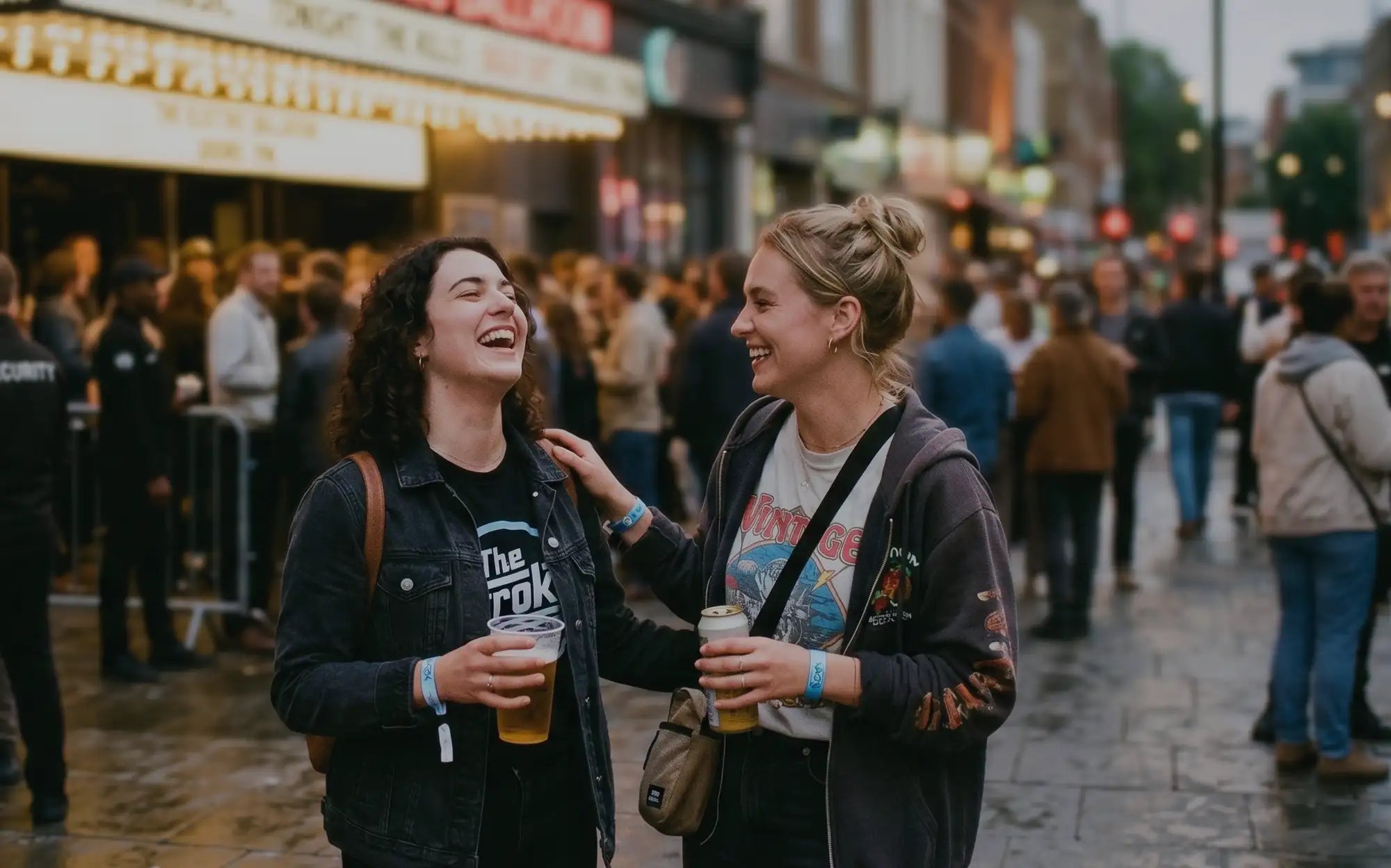
You want to see an artist you love. Nobody in your life wants to go. Your options feel limited: drag someone who doesn't care, skip the show entirely, or go alone.
There's a fourth option. Find someone new to go with.
This sounds simple until you try it. The apps designed for this barely work. Your existing social circles don't overlap with your music taste. And the idea of meeting a stranger from the internet to stand in a crowd together feels somewhere between awkward and sketchy.
But people do this all the time. Nearly half a million people belong to concert-related groups on Meetup alone. Reddit threads asking "anyone going to [show] tonight?" get real responses. K-pop fans have built entire infrastructures for coordinating concert meetups across cities.
The demand is real. The solutions are scattered. Here's an honest breakdown of what actually works.
Why Finding Concert Buddies Is Harder Than It Should Be
Every dedicated concert buddy app faces the same impossible math: you need users in a specific city, going to a specific show, on a specific date. That's an extremely narrow matching problem. Even if an app has 100,000 users, the odds of finding someone in your city going to the same Tuesday night club show are slim.
This is why most concert buddy apps fail. ConcertBuddy.net, ConcertBuddies.com, ConcertBuddyFinder, EventBuddie. The graveyard is full of startups that tried to solve this problem with a purpose-built app and couldn't get enough users to make matching work.
The apps that do work are the ones that already have users for other reasons. Reddit has millions of people. Meetup has established local groups. Fan communities exist because people love the artist, not because they're looking for concert companions. The concert buddy function is a side effect, not the main product.
That's the pattern. The best concert buddy solutions are communities that already exist, not apps built specifically for this problem.
The Methods That Actually Work (Ranked)
1. Fan Communities: The Gold Standard
If you're into an artist with an organized fandom, this is your answer. The infrastructure already exists. You just have to find it.
K-pop fandoms are the most organized concert buddy ecosystem on the planet. Local fan accounts (like @BTSArmy_NYC or @BLINK_Chicago) coordinate meetups before shows. Fans search "[group name] + [city]" on Twitter/X to find their local fanbase. "Cupsleeve events" at cafes near venues create natural pre-show gathering spots. The community is welcoming to newcomers, has strong safety norms, and stays active between tours with listening parties and dance practice meetups.
Jam band culture invented the traveling concert buddy before apps existed. Deadheads, Phish fans, and the broader jam scene (Goose, Billy Strings, Widespread Panic) have built-in "tour buddy" culture where following a band across multiple shows is the norm. Phantasy Tour, Phish.net, and CashorTrade are the hubs. The parking lot scene before and after shows is a massive social space. If you're into this music, the community is extremely welcoming. Strangers become friends because that's how lot culture works.
Swifties and mega-artist fandoms organize through Twitter, TikTok, and Meetup. For major tours, fan accounts coordinate meetups. Friendship bracelet trading at shows creates instant connections with strangers. The Eras Tour demonstrated unprecedented fan organization. If you're seeing a massive artist, search "[artist] + [your city] + meetup" and you'll likely find something.
The advantage of fan communities: shared identity. You're not meeting a random stranger who happens to be going to the same show. You're meeting someone who loves the same thing you love. The conversation starter is built in. The trust is higher. The awkwardness is lower. Every scene has its own concert culture, and finding your people inside it is half the fun.
2. Reddit: Most Versatile
Reddit works for any genre, any city, any show. The user base already exists. You just have to post.
The real volume is in artist-specific subs (r/TaylorSwift, r/Phish, r/Metallica, r/indieheads, r/hiphopheads) and city subs (r/nyc, r/chicago, r/losangeles). People post "anyone going to [artist] at [venue] on [date]?" and others reply.
How to actually use it: Post a few days before the show with the artist, venue, date, and a bit about yourself. Check the person's post history before agreeing to meet. Someone with years of Reddit activity and comments in music subs is a different risk profile than a brand new account. Meet in a public place first if you're nervous.
The advantage of Reddit: you can vet people through their history. The disadvantage: it's post-and-pray. Your post might not get responses for a niche show in a smaller city. But for popular artists in major metros, it works.
3. Meetup: Lowest Awkwardness
Meetup removes the scariest part of finding a concert buddy: the one-on-one stranger meetup. Instead, you're joining a group outing organized by someone else.
There are nearly 476,000 members in concert-related Meetup groups worldwide. Cities like NYC, LA, Chicago, DC, and Seattle have active groups with regular events. You join a local concert group, the organizer posts upcoming shows, members RSVP, and you attend as a group.
The advantages are real: Group dynamics remove pressure. Real profiles with photos and activity history let you see who you're meeting. Organizers curate events and manage the group. It's low-commitment. You're not "matching" with someone. You're just showing up to a group outing.
The disadvantages: Quality varies wildly by city and organizer. Meetup has moved toward a paid model for organizers, which limits group creation. Events may not align with your specific taste. And in smaller cities, groups can be inactive.
Best for: People who want a recurring live music social group, not just one-off companions. Great if you're new to a city and want to build a concert-going circle.
4. Discord: For Genre Diehards
Discord servers exist for every genre and many local music scenes. Metalheads, EDM fans, indie kids, hip-hop heads. If you're already a Discord user and active in music communities, this can work.
The advantage: community vetting. You interact with people over time before meeting in person. Servers often have dedicated "meetup" or "concerts" channels. The people there are already engaged music fans, not casual users.
The disadvantage: fragmented and hard to discover. You need to find the right server. Many are semi-dead. It can feel cliquey.
Best for: People who are already Discord users and active in genre communities.
5. Dedicated Apps: Proceed with Caution
Radiate is the biggest dedicated concert buddy app at around 260,000 downloads. It started in EDM/festival culture and recently expanded to broader nightlife with Radiate 2.0. Users join event-specific group chats, browse who's going, and connect before shows. It has a 3D social map and a ticket marketplace.
The catch: it skews heavily EDM and festival. Male-dominated. Best for major festivals (EDC, Ultra, Coachella, Lollapalooza) in cities with big festival scenes (Las Vegas, Miami, LA, Chicago, NYC). If you're trying to find someone for an indie show at a 500-person venue, Radiate probably won't help.
Beatmatch syncs with Spotify or Apple Music to match users based on actual listening habits, then recommends events and connects attendees. The concept is clever. The execution is limited by a small user base concentrated in NYC, LA, and Seattle.
The honest assessment: Try these apps if you're in a major city going to a popular show. Don't count on them. The chicken-and-egg problem is real. They need more users to be useful, but they can't get more users until they're useful.
6. Facebook Groups: Still Works for Some
City-specific Facebook Groups like "[City] Concert Buddies" exist and can be active, especially for the 30+ demographic that still uses Facebook regularly.
The advantage: real-name profiles, mutual friends as trust signals, easy to find via search.
The disadvantage: Facebook's declining relevance with younger demographics, inconsistent group activity, and privacy concerns about your name and profile being visible.
Worth checking if you're already a Facebook user. Not worth creating an account for.
What to Do When You Find Someone
You've connected with someone online. You're both going to the same show. Now what?
The first meetup: Meet in a public place before the show. A coffee shop, a bar near the venue, the venue lobby. Daytime if possible for a first meeting. Have an exit plan if the vibe is off. This isn't paranoia. It's basic safety for meeting anyone from the internet. If you want to prepare for the show so you actually remember it later, do that prep before you meet up.
What to talk about: The show is the conversation starter. "How'd you get into this artist?" "Have you seen them before?" "What song are you hoping they play?" You already have the thing in common. Let that carry the conversation. If you're worried about concert etiquette when attending with someone new, we have a guide for that too.
Managing expectations: Not everyone becomes a lifelong concert friend. Some people you'll click with and see shows with for years. Others you'll have a great night with and never talk to again. Both outcomes are fine. You're not interviewing for a best friend. You're finding someone to share a specific experience with. And if you need ideas for which shows are worth the trip, our list of live music experiences worth having is a good place to start.
After the show: If you had a good time, say so. "That was fun, let me know if you're going to anything else soon." If you didn't click, you don't owe anyone a second hangout. A simple "thanks for coming, have a good night" is enough.
One thing worth doing regardless of how the night went: log the show while it's fresh. The 5-minute post-concert rule applies whether you're solo or with someone new. Who you went with is part of the memory. The Concerts Remembered app has a concert crew feature that logs who you went with alongside setlists, venues, and your notes about the night. Tap anyone in your crew later and you'll see every show you've been to together. Years from now, you'll want to remember not just the music but the people you shared it with.
Safety Basics
This deserves direct attention, especially for women and anyone meeting strangers from the internet.
Vet before you meet. Check their post history, social profiles, or whatever information is available. A long history of normal activity is a good sign. A brand new account with no history is a yellow flag.
Tell someone where you're going. Text a friend the venue, the artist, and who you're meeting. Check in after the show.
Meet in public first. Don't have your first interaction be inside a dark, loud venue where it's hard to leave. Coffee or a drink beforehand gives you an out if something feels wrong.
Trust your gut. If something feels off, leave. You don't owe anyone an explanation. "Something came up" is a complete sentence.
Know your exits. Quick mental note when you arrive. Not paranoid, just aware.
Millions of people meet strangers from the internet every year without incident. A little awareness lets you relax and enjoy the show.
When Going Alone Is the Better Answer
Sometimes you can't find anyone. The show is tomorrow, the subreddit didn't respond, and the Meetup group isn't going to this one.
Go anyway.
Solo concerts aren't a consolation prize. They're often better. No coordinating, no compromising on where to stand, no checking if your friend is having fun instead of just experiencing the music yourself. We wrote a whole guide on going to concerts alone if you want the full breakdown.
The point is: don't skip a show because you couldn't find someone to go with. Finding a concert buddy is great. But the music is the reason you're there. The company is a bonus.
FAQs
Is there an app for finding concert buddies?
A few exist. Radiate is the biggest, focused on EDM and festivals. Beatmatch matches based on Spotify listening habits but has a small user base. Neither has solved the core problem: you need a lot of users in your specific city going to your specific show. Most people have better luck with Reddit, Meetup, or fan communities that already have users.
How do I find people to go to concerts with in my city?
Start with Meetup. Search "[your city] concerts" or "[your city] live music" and see what groups exist. Check Reddit for your city's subreddit and search for concert-related posts. If you're into a specific artist or genre, find that fan community on Twitter, Discord, or Facebook. The more specific your music taste, the more valuable fan communities become.
Is it weird to go to a concert with someone you met online?
No weirder than any other way people meet now. Dating apps, hobby groups, gaming communities. Meeting someone who shares your music taste through a concert forum is pretty normal. Just use basic safety practices: meet in public first, tell someone where you're going, trust your gut.
What if I can't find anyone for a specific show?
Go alone. Seriously. The show is worth seeing whether or not you find a companion. You might meet people there anyway. Solo concert-goers are often more approachable than people who came in groups. And if you don't meet anyone, you still saw the artist you wanted to see.
How do I stay safe meeting strangers from the internet?
Vet them beforehand (check post history, social profiles). Meet in a public place first, ideally during the day. Tell a friend where you're going and who you're meeting. Trust your instincts. If something feels off, leave. These are the same rules for meeting anyone from the internet, not specific to concerts.
Are concert buddy apps free?
Radiate is free with an optional paid upgrade. Beatmatch is free. Meetup is free to join groups (organizers pay). Reddit and Discord are free. Facebook Groups are free. The paid options are usually premium features, not access to basic matching.
What's the best way to find concert friends if I'm new to a city?
Meetup is probably your best starting point. Join a local live music group and attend a few events. You'll meet people who go to shows regularly, and some of those connections will stick. It's lower pressure than one-on-one stranger meetups and gives you a recurring social group, not just one-off companions.
What genres have the best concert buddy communities?
K-pop fandoms are the most organized. Jam band culture (Phish, Dead, Goose) has decades of built-in tour buddy infrastructure. EDM/festival culture has Radiate and strong Reddit communities. Mega-artists like Taylor Swift have massive fan networks. Indie and hip-hop have active subreddits and Discord servers. The more passionate the fanbase, the better the community infrastructure.
The Bottom Line
The concert buddy problem is real. Your music taste doesn't have to match your friend group. The apps built specifically for this keep failing. And the idea of meeting a stranger to share a live music experience feels weird until you actually do it.
But people solve this every day. They post on Reddit and find someone going to the same show. They join Meetup groups and build recurring concert crews. They tap into fan communities that have organized meetup infrastructure. They use the scattered tools that exist and make it work.
The best concert buddy solutions aren't apps. They're communities that already have users. Find the one that fits your music taste and your city, and you'll stop missing shows because nobody in your existing life wants to go.
And when you do find someone to share a show with, document it. The Concerts Remembered app tracks who you went with alongside everything else that made the night memorable. Because the people you share concerts with are part of the story. They deserve to be remembered too.
Share: