

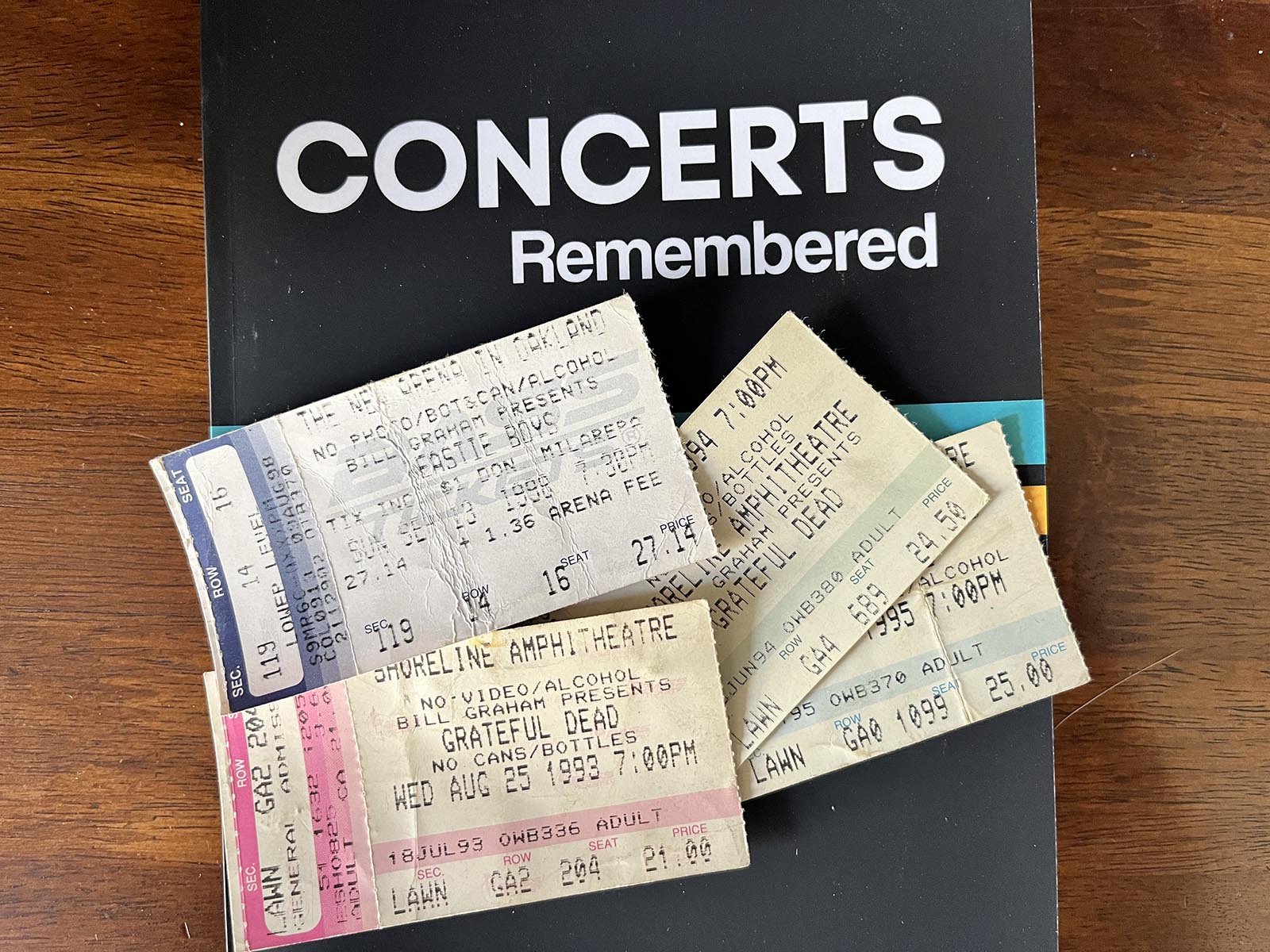
Somewhere in a drawer, a shoebox, or the back of a closet, you probably have concert ticket stubs. Maybe a few. Maybe dozens. You kept them because they felt worth keeping at the time.
Now some of them are fading. The venue name is barely legible. The date is a ghost. In another year or two, they'll be blank slips of paper that prove nothing.
This is the problem with concert tickets: they're printed on paper designed to be cheap and temporary, not archival. If you want them to last, you have to take action. This guide covers why tickets degrade, how to store them properly, options for display, and why digital backup is non-negotiable.

Why Concert Tickets Fade (And Why It Happens Fast)
Most concert tickets, especially older ones, are printed on thermal paper. This is the same stuff used for receipts, parking tickets, and anything else designed to be printed quickly and cheaply. Thermal paper reacts to heat to create an image. No ink involved.
The problem: thermal paper reacts to everything else too.
Sunlight causes rapid fading. Leave a ticket on a windowsill for a few weeks and watch it disappear.
Heat accelerates deterioration. A hot car. A sunny room. Near a radiator.
Humidity causes warping, sticking, and eventually mold.
Friction from wallets, pockets, or being stacked without protection wears the image off.
Time is the final enemy. Even perfect storage only slows fading. Thermal paper simply doesn't last.
A ticket that looks fine today might be unreadable in 3-5 years without proper care. According to the National Archives of Australia, thermal paper is one of the least stable document formats in existence. Some tickets fade faster than others depending on the paper quality and printing method. The only way to know which of your tickets are at risk is to assume they all are.

Storage Options That Actually Work
The goal of ticket storage is simple: minimize exposure to light, heat, humidity, and friction. Here are the methods that accomplish this, ranked by effectiveness.
| Method | Protection | Browsability | Memory Context | Typical Cost |
|---|---|---|---|---|
| Archival box + sleeves | Excellent | Low | None | $25-40 |
| Archival binder | Very Good | High | Minimal | $18-35 |
| Concert journal | Good | High | Excellent | $15-25 |
| UV frame/shadow box | Good | Display only | Some | $45-100 |
| Digital scan | Permanent backup | N/A | None | Free |
The 3-Step Preservation Protocol
- Day 1: Scan at 300+ DPI (your permanent backup)
- Week 1: Sleeve in polyester/Mylar, store flat in a cool, dark spot
- Ongoing: Keep away from heat, humidity, and direct light
Acid-Free Sleeves
Individual plastic sleeves designed for archival storage. Acid-free materials prevent yellowing and chemical degradation. Each ticket gets its own sleeve, no stacking or friction.
Best for: Tickets you want to preserve long-term but don't need to display.
Where to find: Archival supply stores, photo storage sections at craft stores, or online. Look for "acid-free" or "archival quality" labels.
Archival Storage Boxes
Museum-quality boxes designed to protect documents from light and humidity. Store sleeved tickets flat inside, kept in a cool, dark closet.
Best for: Large collections. Tickets you rarely need to access.
The setup: Acid-free sleeves inside an archival box in a climate-controlled space. This is as close to museum-grade as you'll get at home.
Archival Binders
Three-ring binders with archival-quality sleeve pages. Organize by year, artist, venue, or however makes sense to you. Easier to flip through than a box.
Best for: People who want organization and occasional browsing without display.
Tip: Store the binder vertically on a bookshelf, not flat. This prevents pressure on the tickets.
Concert Journal
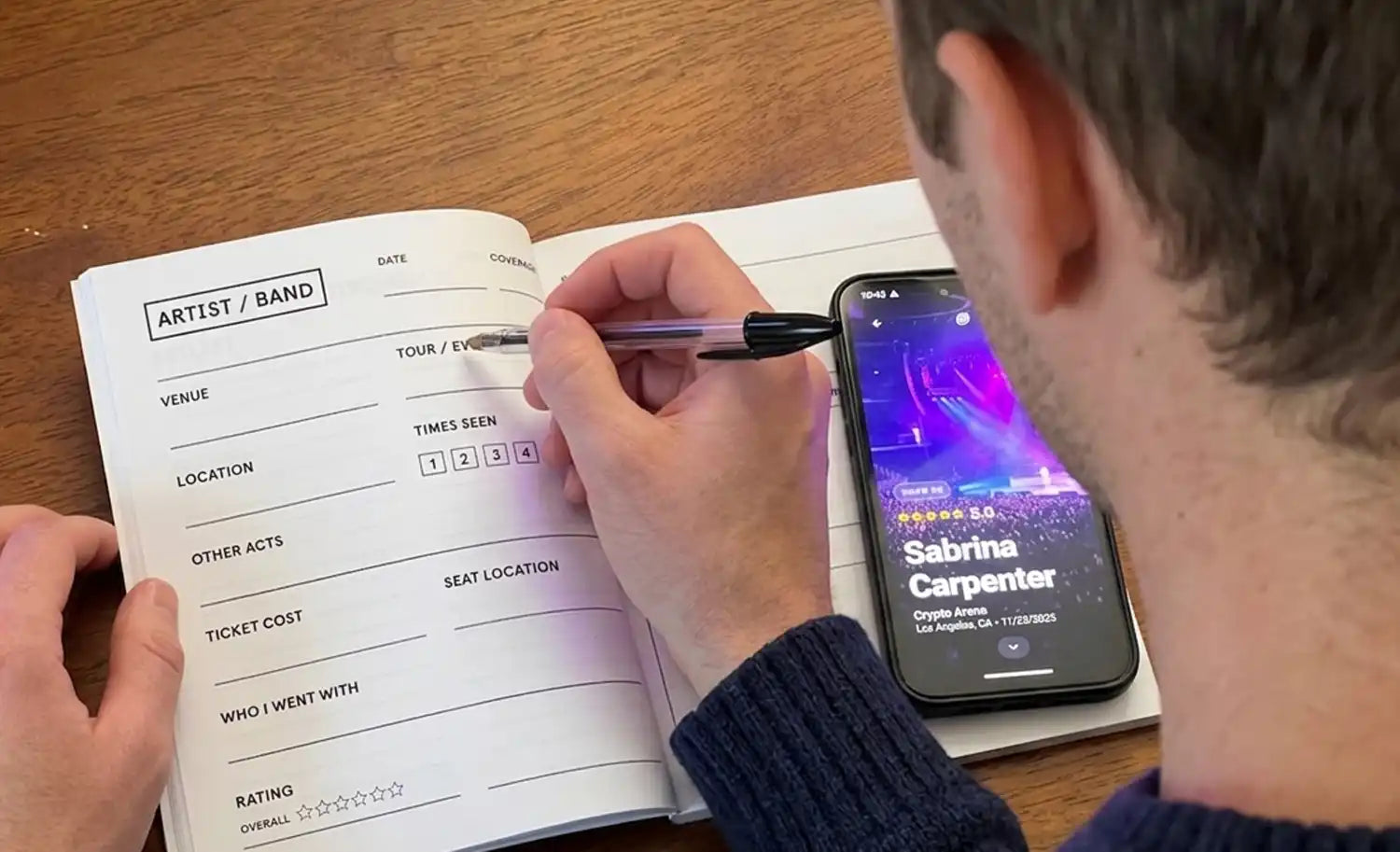
A concert journal that includes pockets or blank pages for memorabilia. Tickets stay paired with your written memories of each show.
The Concerts Remembered Journal dedicates one page per concert entry specifically for ticket stubs, wristbands, and photos. The ticket doesn't just survive. It stays connected to the context that makes it meaningful.
Best for: People who document concerts and want tickets stored alongside memories, not in a separate system.
What to Avoid
Loose in a drawer: No protection from friction, light, or humidity. Tickets get bent, buried, forgotten.
In your wallet long-term: Heat from your body, friction every time you open it, eventual damage from bending.
Regular plastic sleeves: Some plastics contain PVC, which releases acids that darken thermal paper on contact. Avoid any sleeve that doesn't specify its material. Look for "Mylar," "polyester," or "polypropylene" on the packaging—these are chemically inert and safe for long-term storage.
Humid storage: Basements and attics are the worst places. Temperature swings, moisture, and pest risk.
Direct sunlight: Even brief exposure starts the fading process.

Display Options (For Tickets You Want to See)
Storage preserves tickets but hides them. Display lets you enjoy them but risks damage. The key is protection while visible.
UV-Protective Frames
Glass or acrylic that blocks ultraviolet light. This slows fading significantly for displayed tickets. Single-ticket frames work for meaningful stubs. Multi-ticket frames create grid layouts for collections.
Important: UV protection reduces fading but doesn't eliminate it. Displayed tickets will still fade over time, just slower.
Shadow Boxes
Deeper frames that hold three-dimensional objects. Combine a ticket with the wristband from that show, a guitar pick you caught, or a printed photo from the night. Creates a complete memory display, not just a stub. The FramePro shadow box is a popular option — see more recommendations in our gift guide for concert lovers.
Corkboard Displays
Casual, easy to update. Pin tickets as you collect them. Good for an active collection you're still adding to. Less protective than framing.
Downside: No UV protection. Pins create holes. Best for tickets you care less about preserving perfectly.
String and Clip Displays
Modern, Pinterest-style look. String across a wall with clips holding tickets. Easy to rearrange.
Same downside as corkboard: Exposure without protection. More decorative than archival.
The Hybrid Approach
Display high-quality scans or photocopies. Store the originals. You get the visual enjoyment without risking your irreplaceable physical tickets.
For detailed display ideas, see How to Display Concert Tickets.
Digital Backup Is Non-Negotiable
Here's the uncomfortable truth: thermal paper will fade eventually, regardless of how well you store it. The only permanent preservation is digital.
Scan every ticket you care about. Use a flatbed scanner at 300 DPI or higher for archival quality, or take a photo in good lighting if a scanner isn't available. Save files with clear filenames (artist-venue-date).
Back up the scans. Cloud storage, external drive, both. Files don't degrade.
Do this now, not later. The ticket that's slightly faded today will be illegible in a few years. Capture it while you can still read it.
A digital backup paired with physical storage gives you redundancy. The scan proves what the stub says even after the stub becomes unreadable. The stub retains its physical artifact value even if the image disappears.

What to Do With Already-Faded Tickets
Some tickets are already past their prime. The text is ghosting. The date is barely visible. You can't undo thermal paper degradation, but you can prevent further damage and capture what remains.
Scan or photograph immediately. Capture whatever is still visible. Even partial information is better than none. Play with contrast and brightness in photo editing to bring out faded text.
Store properly going forward. Get them into acid-free sleeves. Stop the damage from getting worse.
Add context while you remember it. Write down what the ticket was for, even if you can attach a note to the sleeve. Your memory fills in what the paper can't show.
Don't throw them away. Even a blank stub has artifact value. It's physical proof you were there, even if the printing is gone.
What About Digital-Only Tickets?
Most concerts now use mobile tickets or print-at-home PDFs. The era of physical ticket stubs is ending. This makes the stubs you do have from earlier years even more rare and valuable.
For digital tickets:
Screenshot mobile tickets before the event and save to a dedicated album or folder.
Save PDF tickets with clear filenames.
Consider printing memorable ones on quality paper and treating them like physical stubs.
Use the app. The Concerts Remembered app logs the concert details that mobile tickets captured, creating a digital archive when physical artifacts don't exist.
Create your own ticket. Our free concert ticket generator lets you design and print a custom ticket for any show. Enter the artist, venue, date, and seat details, then download a print-quality file.
Creative Uses Beyond Storage and Display
Not everyone wants to frame and archive. Some people prefer active, creative uses:
Concert scrapbooks. Combine tickets with photos, setlists, and written memories. See How to Make a Concert Scrapbook.
Memory jars. Drop tickets into a jar, pull one out randomly years later for a memory prompt.
Gift-giving. Frame a ticket with a photo as a gift for someone you attended with.
Journal covers. Laminate special tickets and attach to notebook covers.
Collage art. For tickets too damaged to preserve individually, incorporate into a larger art piece.
The goal is doing something with them. Tickets in a shoebox, forgotten, serve no one.
The Journal Solution: Tickets + Context Together
The problem with storing tickets separately from concert memories is disconnection. A stub in a box is just a stub. You remember you saw a show. You don't remember why it mattered.
The Concerts Remembered Journal solves this by pairing each concert entry with a memorabilia page. Write about the show on the structured pages: date, venue, ratings, favorite moments, setlist. Slip the ticket into the pocket on the facing page.
Now the ticket isn't just proof of attendance. It's anchored to everything that made the night worth remembering.
Thirty concerts fit in one journal. Years later, you flip through and find not just tickets, but complete memories. The stub triggers the entry. The entry brings back the night.
FAQ
How long do concert tickets last without preservation?
Thermal paper tickets can start fading within 1-3 years even in decent conditions. Direct sunlight or heat can cause visible fading within weeks. With proper archival storage, you can extend legibility to 10-20 years, but no physical ticket lasts forever without degradation.
Is laminating tickets a good idea?
Laminating stops fading by sealing the ticket from air and light, but it permanently alters the ticket. You can't un-laminate. For many collectors, this trades one form of preservation for another. If the ticket is already fading badly, lamination can lock in what remains. For pristine tickets, acid-free sleeves are less invasive.
Should I store tickets flat or can they be upright?
Flat is ideal because it prevents bending and warping. If storing in a binder on a shelf, vertical is fine as long as tickets are in sleeves and not sliding around. Avoid stacking heavy items on top of flat storage.
What's the best way to organize a ticket collection?
Chronological (by date) is most common. Other options: by artist, by venue, by city, or by genre. Match your organization to how you'll want to find tickets later. Whatever system you'll actually maintain beats whatever system is theoretically optimal.
Are old concert tickets worth money?
Some are, especially for legendary shows, historic venues, or deceased artists. The 1969 Woodstock tickets, early Beatles concerts, or final shows before a venue closure can have significant value. Most personal ticket collections have sentimental value more than monetary, but it's worth checking what comparable stubs sell for before assuming yours are worthless.
How do I preserve tickets from international shows?
Same methods apply globally. The challenge is often different paper types or ticket formats across countries. Always scan as soon as possible after returning home, as you don't know what paper quality was used.
What about festival wristbands and lanyards?
Similar principles. Store flat if possible, in acid-free containers. Fabric wristbands can degrade or become brittle over time. For comprehensive guidance, see What to Do With Concert Wristbands.
Is it worth preserving tickets for small shows I barely remember?
Yes. Small shows often become the most valuable memories later when the band gets famous, the venue closes, or you realize it was the start of something. You can't predict which shows will matter most. Preserve everything that costs you nothing but a few minutes to store properly.
Keep Your Tickets Where They Belong
Ticket stubs deserve more than a shoebox. They deserve context.
The Concerts Remembered Journal pairs each concert entry with a pocket for your memorabilia. Write about the night, rate the show, record the setlist, then slip the ticket into the page it belongs with.
→ Shop the Concert Journal Collection
Already digital? The Concerts Remembered app logs the details mobile tickets used to capture.
→ Download the Concert Tracking App


Share: