

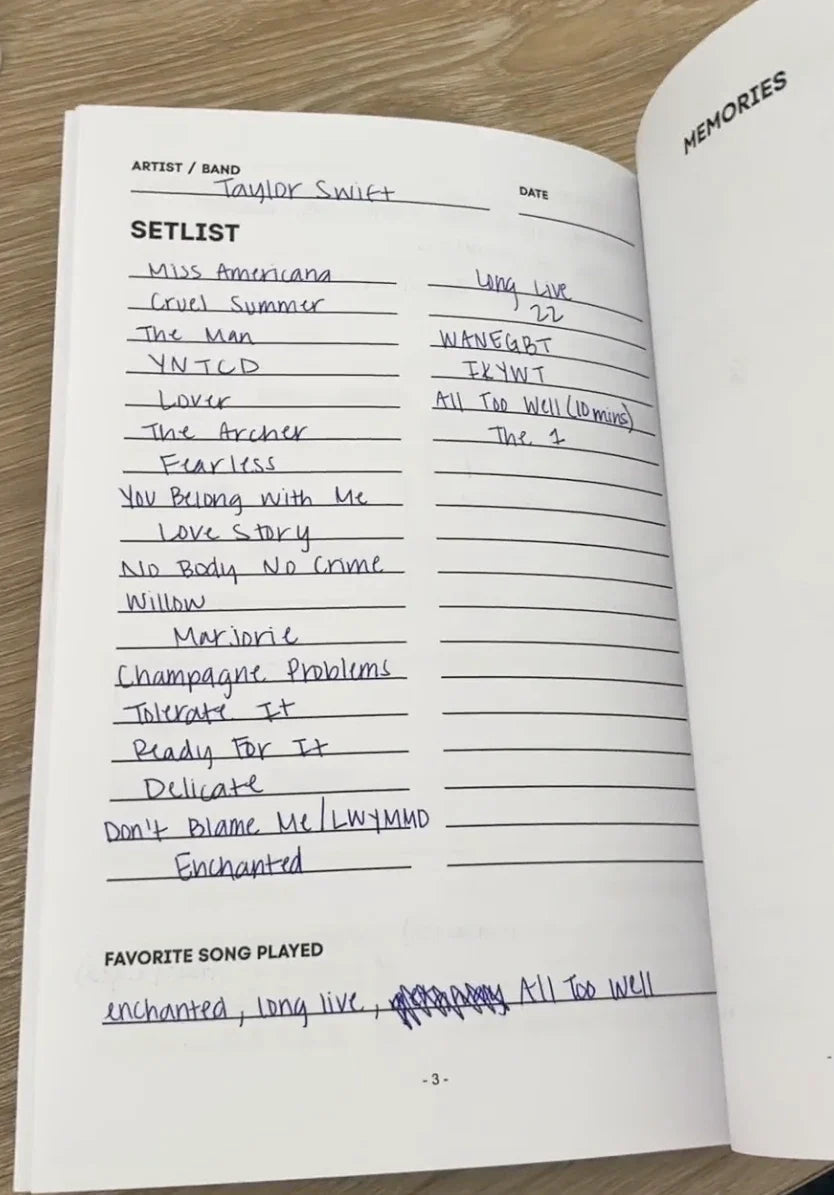
You just got home from an incredible show. Your ears are still ringing, your voice is shot from singing along, and you're desperately trying to remember what that third song was. You know, the one that made you lose your mind?
Or maybe the show was years ago. You know you saw them at some theater in 2011, you know they opened with something unexpected, and the rest has gone soft at the edges.
Either way, you need a setlist. The good news? Finding one is easier than you might think, and it won't cost you a dime.
Why Setlists Matter to Concert Fans
A setlist is more than just a list of songs. It's the blueprint of a shared experience, a way to relive the emotional arc of a night that meant something to you.
For the memory keepers, having the exact song order lets you document the experience properly, whether that's in a concert journal, a scrapbook, or an app. Most people who go looking for a setlist are trying to pin down a night they already lived, and the song order is the thread that pulls the rest of it back.
And let's be honest: sometimes you just need to settle a debate with your concert buddy about whether the encore was two songs or three. No one wants to spend the middle of a show writing down song titles. That's exactly why the setlist tracker in the Concerts Remembered app pulls the set in for you afterward, but we'll get to the saving part once you've found what you're looking for.
7 Ways to Find Any Concert Setlist
1. Setlist.fm (Best Overall)
If you're going to bookmark one website for concert setlists, make it this one. Setlist.fm is the Wikipedia of setlists, powered by a passionate community of fans who document shows in real time.
Here's how to use it:
Head to setlist.fm and type the artist's name into the search bar. You'll land on their artist page, which shows recent setlists chronologically. From there, you can filter by year, venue, or tour name. Click on any specific date to see the full setlist, including notes about covers, guest appearances, or songs that got cut.
The site also shows you stats like the most-played songs across all shows. If you're looking ahead to a show you have tickets for rather than back at one you attended, that's a different job, and we've covered it separately in our guide to predicting a concert setlist before the show.
Pro tip: if you attend a lot of shows, consider creating a free account. You can track concerts you've been to, contribute setlists yourself, and connect with other fans. Adding a setlist is straightforward. Just find the concert date, click "Add Setlist," and enter the songs in order. The community will thank you.
Setlist.fm also lets you mark shows you attended, which is its own small rabbit hole. We've written about what the "I Was There" button actually does and where it falls short as a concert history.
2. Artist-Specific Fan Databases
Many artists with dedicated fanbases have their own setlist databases maintained by superfans. These niche archives often contain more detail than general setlist sites, including notes about improvised moments, extended jams, rare song debuts, and the exact spot in the set where something went off script.
These databases work especially well for jam bands, legacy rock acts, and artists known for varying their setlists dramatically from night to night. Think Phish, Grateful Dead, Pearl Jam, and Bruce Springsteen.
To find these, search Google for "[Artist name] setlist database" or "[Artist name] concert archive." You might be surprised how thorough some fan communities have been.
The interface often feels old-school. Frames, tables, a color scheme from 2003. But the depth can be remarkable, and for historic shows from the 70s, 80s, or 90s these fan-maintained archives regularly hold details that mainstream sites never captured.
3. Artist Fan Communities (Reddit, Facebook Groups)
For shows that happened within the last few hours, fan communities are often the fastest source. People post setlists in real time, sometimes updating song by song as the concert unfolds.
Reddit is particularly useful here. Many major artists have dedicated subreddits where fans share setlists, discuss surprises, and post videos. Some examples:
- r/TaylorSwift for Eras Tour updates
- r/Coldplay for ongoing tour documentation
- r/gratefuldead for anything Dead-related
- r/ToolBand for, well, Tool
Facebook groups work similarly, though they tend to skew toward older demographics and legacy artists. Search for groups with names like "[Artist Name] Fans" or "[Tour Name] Discussion" and you'll usually find active communities posting setlists after every show.
The beauty of these communities is that you can ask questions. If a setlist looks incomplete or you want to know about a specific moment, someone who was there will probably respond.
4. YouTube Full Concert Videos
This method takes more effort but can be rewarding, especially for older shows or international concerts that might not be well documented elsewhere.
The search trick is simple: type "[Artist] [City] [Year] full concert" into YouTube. So if you're looking for a Radiohead show from Prague in 2018, try "Radiohead Prague 2018 full concert."
You might find a full recording from someone in the crowd, or you might find compilations of individual songs that, pieced together, reveal the setlist. Some uploaders even include timestamps or track listings in the video description.
This approach works especially well for festivals, where fans often record entire sets and upload them the next day.
5. Social Media (Twitter/X, Instagram)
Social media isn't always organized, but it's immediate. If a concert happened tonight, Twitter and Instagram are probably buzzing about it.
Try searching hashtags like:
- #[ArtistName]Setlist (for example, #BruceSpringsteenSetlist)
- #[TourName] (for example, #ErasTour)
- #[ArtistName][City] (for example, #FooFightersDenver)
On Twitter, you can also search the artist's name plus "setlist" and filter by "Latest" to see the most recent posts. Instagram works better for photos of physical setlists taped to the stage, which fans sometimes capture during the show.
The downside of social media? Information can be scattered, incomplete, or occasionally wrong. But for breaking concert news, nothing beats it.
6. Local News Concert Reviews
If you need to go way back, this one is perfect for digging into history, but it is not easy. If you're trying to find the setlist for a concert from 20 or 30 years ago, your best bet might be the local newspaper that reviewed the show.
Search Google with something like: "[Artist] concert review [City] [Year]" or "[Artist] [Venue] [Year] setlist"
Newspaper archives, both digital and through library databases, can surface reviews that mention setlists in full or describe the show in enough detail that you can reconstruct it. This works particularly well for historic shows, arena tours from major artists, and concerts that made local headlines for one reason or another.
If you have access to a library card, check if your library offers free access to newspaper archives like Newspapers.com or ProQuest Historical Newspapers.
7. The Artist's Official Channels
Some artists publish their own setlists, and it's more common than you might expect.
Bruce Springsteen's official website has maintained detailed setlist archives for years. Pearl Jam sells official bootlegs of nearly every show, complete with track listings. Bands like Phish and Widespread Panic have long histories of documenting and sharing setlists through official channels.
Check the artist's official website, particularly any "Tour" or "Archive" section. Some artists also post setlists to their Instagram stories the night of the show, making it easy to screenshot for your own records.
This isn't universal, but it's always worth a quick check before digging into fan databases.
Which Source Should You Trust?
Not every source is equally reliable, and the right one depends on how recent the show was and how much detail you need.
| Source | Best for | Speed | Accuracy |
|---|---|---|---|
| Setlist.fm | Almost every situation | Hours after the show | High, community corrected |
| Fan databases | Jam bands, legacy acts, deep detail | Days | Very high for artists covered |
| Reddit and Facebook | Shows from the last few hours | Minutes | Mixed, unverified |
| YouTube | Older or international shows | Days to weeks | High if the full set was filmed |
| Social media | Breaking, same night | Minutes | Low, often partial |
| Newspaper archives | Shows from the 70s through 90s | Slow | High but rarely complete |
| Official artist channels | Artists who self-document | Varies | Highest when available |
The short version: start with Setlist.fm for anything from the last two decades, move to fan databases if the artist has a devoted community, and fall back to newspaper archives for anything from before the internet documented shows properly.
How to Get a Physical Setlist at a Concert
Finding setlists online is easy. Getting the actual paper setlist taped to the stage? That takes timing, positioning, and a bit of luck.
Wait by the stage after the show. Crew members often hand out setlists to fans who stick around after the lights come up. Position yourself near the front, be patient while they break down equipment, and ask politely. A simple "Any chance I could get a setlist?" works better than demanding or hovering.
Ask the sound engineer. The person at the mixing board (usually in the middle of the venue) sometimes has an extra copy. Wait until the show ends and approach respectfully. They're working, so keep it brief.
Check with venue staff. Some smaller venues collect setlists after shows. A friendly question to a bartender or door person occasionally pays off, especially at clubs where staff know the regulars.
Watch for setlists being tossed. Some artists throw setlists into the crowd during the encore or as they leave the stage. Position yourself near the front and keep your eyes on the stage during those final moments.
Connect with other fans. If someone else got the setlist, they might share a photo or even trade for something else. Concert communities on Reddit and Facebook are good places to ask.
Physical setlists are rare, which is exactly what makes them valuable. Even if you don't get one, you can always print a copy from setlist.fm and add it to your journal or scrapbook. The printed version captures the same information; the original just has more story attached.
How to Save Setlists Once You Find Them
Finding a setlist is only half the battle. If you want to actually remember the concert five years from now, you need a system for saving what you find.
The fastest option is to let the app do it. The setlist tracker in the Concerts Remembered app saves setlists from every show with Setlist.fm integration, lets you star the songs that actually hit, and builds a searchable archive of your concert history. It notifies you when a setlist gets posted for a show you attended, so you're not checking back manually for three days. Everything stays backed up, which means you'll never lose track of that random Tuesday night show that ended up being unforgettable.
Once you've saved a few dozen, the collection starts telling you things. We looked at what saved setlists reveal about the shows that mattered, and the patterns are usually not the ones people expect.
If you'd rather keep it on paper, writing out a setlist by hand alongside a ticket stub is its own kind of record. Our guide on how to add setlists to your concert journal covers layout ideas for that approach.
However you choose to save them, the point is actually doing it. Setlists are easy to find in the moment but surprisingly hard to reconstruct from memory six months later.
FAQ
When do setlists get posted after a concert?
For popular artists, setlists often appear on Setlist.fm within hours of the show ending, sometimes even during the encore. Smaller shows or international dates might take a day or two. If nothing shows up after a week, you might need to contribute it yourself or check fan communities for someone who attended.
How accurate are fan-submitted setlists?
Generally very accurate, especially on established platforms like Setlist.fm where the community self-corrects errors. That said, mistakes happen. Song titles occasionally get mixed up, and acoustic interludes or brief covers sometimes go undocumented. For maximum accuracy, cross-reference with a second source or check the comments section where other attendees often chime in with corrections.
What if I can't find the setlist for my concert?
Start by checking all seven methods above, since sometimes a setlist exists in one place but not another. If you still come up empty, try reaching out to fan communities directly and ask if anyone attended that specific show. You can also contribute what you remember to Setlist.fm, even a partial setlist, and other fans may help fill in the gaps.
What is the best website for concert setlists?
Setlist.fm, for almost everyone. It has the largest archive, the fastest posting times for major tours, and a community that corrects errors. Artist-specific fan databases beat it on depth for jam bands and legacy acts, and official artist archives beat it on accuracy when they exist, but those cover a fraction of the artists Setlist.fm does.
How do people get setlists at concerts?
Most physical setlists come from crew members handing them out after the house lights come up, or from artists tossing them into the crowd during the encore. Standing near the front and waiting a few minutes after the show ends is the single most reliable approach. Asking the sound engineer or venue staff sometimes works at smaller clubs.
Can I find the setlist for a concert from the 1990s?
Often, yes. Setlist.fm has historical sets going back decades for many touring artists, contributed by fans reconstructing shows from memory and old records. For anything it's missing, artist fan databases and newspaper archives are the two best fallbacks, especially for arena tours that got reviewed in the local paper.
Is there an app that saves concert setlists automatically?
Yes. The Concerts Remembered setlist tracker imports setlists from Setlist.fm into each show in your concert history, lets you star favorite songs, and sends a notification when a setlist gets posted for a show you attended. It's free on iOS and Android.
Summary
Concert memories fade faster than we'd like to admit. A setlist brings you right back to that specific night, that specific crowd, that specific moment when the band played the song you'd been waiting years to hear live.
Now you know exactly where to find them. The only question left is what you'll do with all those memories once you start collecting them.
Share: